Table Of Content
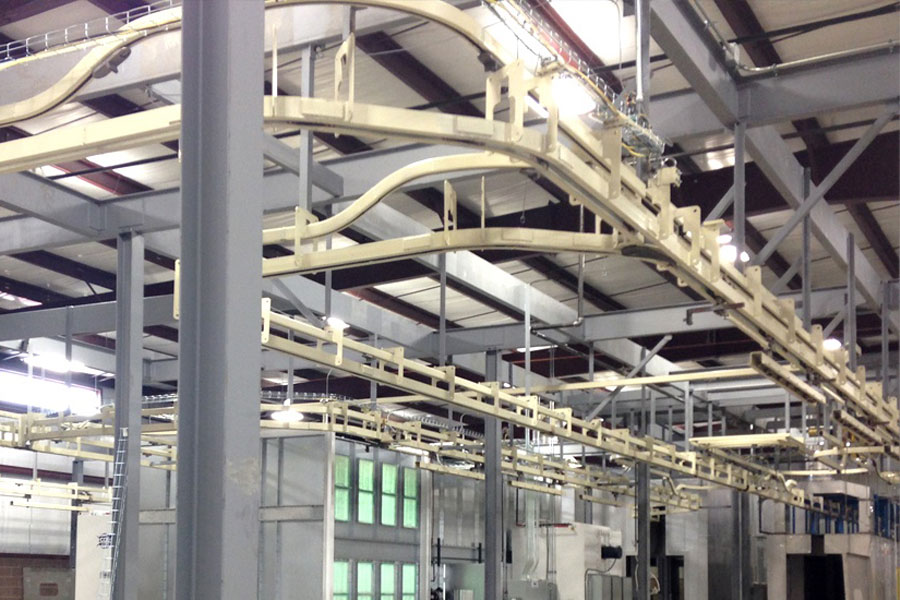
If objects are particularly heavy or bulky — or if the conveyor belt is carrying them for a long distance or duration — rollers may be placed on the sides of the conveyor belt for support. A conveyor belt works by using two motorized pulleys that loop over a long stretch of thick, durable material. When motors in the pulleys operate at the same speed and spin in the same direction, the belt moves between the two. The point where items are transferred to and from the conveyor is a critical one. Most conveyors use side to side transfers, powered transfers, dead plates, gravity rollers, etc. to facilitate this. Products with a smaller footprint may require a powered transfer, while larger and longer products may need gravity rollers.
Conveyor Belt Uses
The automated nature of conveyor belts means that workers don’t have to manually handle large items or lift heavy loads while they work. This improves safety on the production floor, reducing the risk of accidents and injuries. For modern warehouses, manual transfer operations are unable to keep up with throughput levels required for speedy order fulfillment cost-efficiently.
Key Components of Conveyor Belt Systems
The unit contains a counter bearing that keeps the parts moving efficiently. This unit also allows for the belt to move in reverse and manage the repeated adjustments in direction for some systems. Belt ConveyorsThe most popular and straightforward type of conveyor is the belt conveyor.
Tips for Conveyor Design
Furthermore, scalability and customization are critical in meeting the diverse needs of different industries. Engineers must design systems that can be easily adapted or expanded, considering future growth or changes in production needs. This requires modular designs and flexible control software to accommodate new functionalities or integrate with other systems. Also, these systems are integrated with intemperate equipment and technology. It provides the options of enhanced performance, good steadfastness and durability, removal of overloading, assembling, and distribution.
Vertical Reciprocating Conveyors
In some industries, a conveyor belt brings products through a manufacturing or packaging line and back out again. A large plastic chain conveyor is best used for transferring plastic-footed pallets, while a chain-driven roller conveyor is best suited for wooden pallets. Also, the former is best used for moving smaller boxes or totes than the latter. Factors such as product weight, dimensions and fragility will greatly impact your decision process.
Conveyor Belt System Working Principle
Roller conveyors are commonly used in warehouses, distribution centers, and assembly lines. Join us as we unravel the secrets behind maximizing production output through optimal conveyor belt design. This new edition continues on its journey of being an introduction to the wide variety of conveyor types and application methods available.
Conveyor belts designed for the mining industry should have excellent resistance to impact, tearing, and puncturing. They should also be flame-resistant and capable of handling steep inclines or declines. When designing conveyor systems, it’s important to consider maintenance, cleaning, and repair requirements. This is essential to ensure that maintenance tasks can be carried out quickly and efficiently, minimising downtime and maximising productivity. These conveyors accomplish the most basic material handling task –moving products quickly and efficiently from one point in a facility to another.
Tonnage per Hour Production Requirements

This is a somewhat newer consideration in custom designing aggregate processing plants and material handling solutions. It’s true that a variety of industry trends—a focus on better safety, for one—are driving the adoption of conveyors in places where truck hauling used to be common. To that end, this blog provides five conveyor system design considerations to help maximize material handling efficiency, boost productivity and throughput and reduce costs. By automating the movement of production lines, they ensure tasks complete quickly and accurately. This helps reduce manual labor costs and free up employees’ time to focus on other tasks such as quality control or customer service.
Plastic Belt Conveyors
The following material concentrates on belt conveying systems, which are the most prevalent, in order to limit the topic of conveying systems. Working of a Conveyor SystemConveyor systems are part of production processes. It is important to understand how everything fits together when discussing the workings of these systems. Enhanced Profitability – Elimination of carryback in the belt system minimizes cleanup and reduces maintenance cost too where ultimately it results in enhanced profitability. View our conveyorproject gallery for even more examples of conveyor equipment and systems.
Top Conveyor Manufacturers and Suppliers in the US & Canada - Thomas Insights
Top Conveyor Manufacturers and Suppliers in the US & Canada.
Posted: Thu, 19 Jan 2023 08:00:00 GMT [source]
A vibratory conveyor system moves materials from one location to another using vibration to facilitate the movement. The surface of the conveyor is usually a smooth metal trough, improving durability and allowing for conveyance of hot materials. The trough is attached to a network of reactor springs and a drive connection situated on an angle causing the trough to vibrate and facilitate the material to move in the desired direction. There are different types of vibrating conveyors which can be classified based on the design and type of application. Additionally, the E3.series offers tools to support the diverse variations of conveyor system design.
By monitoring productivity metrics, such as units produced per hour or labor hours per unit, manufacturers can identify opportunities for process optimization and performance improvement. Automated conveyor systems can collect real-time data on production output, downtime, and performance metrics. This data can be analyzed to identify bottlenecks, optimize workflows, and make data-driven decisions to improve overall manufacturing efficiency. Automated conveyor systems can be integrated with sensors, scanners, and other technologies to ensure accurate and precise material handling.
In any instance that has sanitary requirements, exposure to harsh chemicals, or in washdown environments, stainless steel is appropriate. Stainless steel is chemical resistant, easy to clean, and is another good option for food processing, pharmaceutical, or hygiene industries. Choosing the proper conveyor system design for your business will keep your employees safe and efficient, and create standards that make logistics and forecasting a whole lot easier. Conveyor systems are designed for many different purposes and applications, so each one looks a little bit different.


No comments:
Post a Comment